ISO9001 Certified Professional Manufacturer & Supplier of Optics
+86-0431-87911611 admin@ytoptics.com

Contact us
-
 Email: admin@ytoptics.com
-
 English Inquiry Support:
-
 Add: 2# Automotive InnovationPark,
City,Jilin Province, China
Technical Specifications for Glass Dome with Stainless Steel Metal Flange
1. Product Overview
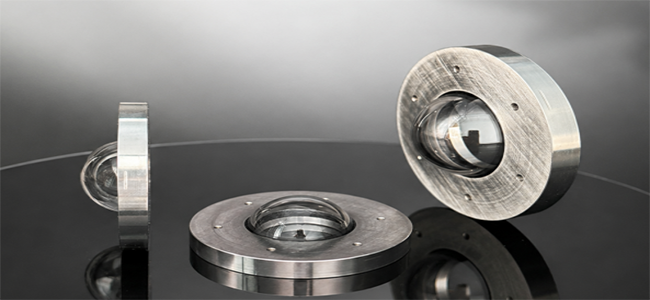
The glass dome with stainless steel flange is a combined optical window assembly that integrates a high-performance glass dome with a stainless steel flange through a precision encapsulation process. Designed specifically for camera systems, this product provides excellent optical transmission while ensuring a reliable mechanical connection and seal with the camera housing or protective enclosure via the metal flange structure. It serves both as an optical window protecting internal precision optical components from external environmental influences and as a key component in pressure-bearing or weather-resistant systems, finding wide application in security monitoring, underwater photography, vehicle-mounted cameras, industrial vision, and outdoor imaging equipment.
2. Structural Composition
This component consists of two core parts:
Glass Dome
Made from high-quality optical glass (such as BK7, fused silica, or sapphire) through precision grinding and polishing. The dome has a hemispherical or near-spherical structure with optimized surface curvature to minimize angular deviations and aberrations affecting incident light. Its high optical profile accuracy and excellent surface finish ensure clear, distortion-free imaging quality throughout the entire aperture. Depending on the application, anti-reflective coatings (AR), hydrophobic coatings, or hard protective coatings can be applied to the inner and outer surfaces of the dome to improve transmittance or environmental resistance in specific wavelengths.
Stainless Steel Metal Flange
Made from high-quality stainless steel (such as SUS304 or SUS316L) through precision machining, possessing excellent corrosion resistance and mechanical strength. The flange is designed with ease of installation and reliable sealing in mind, typically equipped with standard holes or threads for rigid connection to the camera body, housing, or support system. The flange and glass bulb are joined by a highly reliable sealing process to ensure airtightness and watertightness at the connection. It can be adapted to O-ring seals or flat sealing structures to meet IP67 or higher protection level requirements.
3. Functional Characteristics
Optical Performance: As the first optical interface in the camera's optical path, the glass dome is designed with the imaging system's requirements for transmittance and low optical loss in mind. Precise control of the dome's surface accuracy and optical uniformity effectively avoids imaging distortion caused by spherical refraction. After applying an anti-reflective coating, transmittance in the target operating wavelength range (such as visible light 400-700nm or near-infrared band) can be significantly increased to over 95%, maximizing the consistency between the light signal intensity received by the camera sensor and the original scene.
Mechanical Protection: The dome's hemispherical structure provides excellent impact resistance, effectively dispersing point impact forces across the entire spherical surface when subjected to external impacts, reducing the risk of breakage due to localized stress concentration. The rigid connection of the stainless steel metal flange ensures the structural stability of the component under complex conditions such as vibration and impact, preventing optical path misalignment or seal failure due to relative displacement.
Sealing Protection: The sealed connection between the metal flange and the glass dome, as well as the interface sealing design between the flange end face and the camera housing, together constitute a complete protective barrier. This component effectively prevents external media such as dust, moisture, and corrosive liquids from entering the camera's interior, protecting the delicate optical sensors and electronic components and ensuring their long-term stable operation even in harsh environments.
Environmental Weather Resistance: The stainless steel material itself possesses excellent oxidation and corrosion resistance, capable of withstanding harsh environments such as high humidity, salt spray, and chemical solvents. Hydrophobic or anti-fog treatments on the glass dome surface further reduce the impact of moisture condensation and contaminant adhesion on image sharpness. The overall component typically has a temperature range of -40°C to +85°C, meeting the needs of most industrial and outdoor applications.
4. Typical Application Scenarios
5. Quality Control and Testing
During the manufacturing process, this product undergoes multiple rigorous testing procedures to ensure delivery quality:
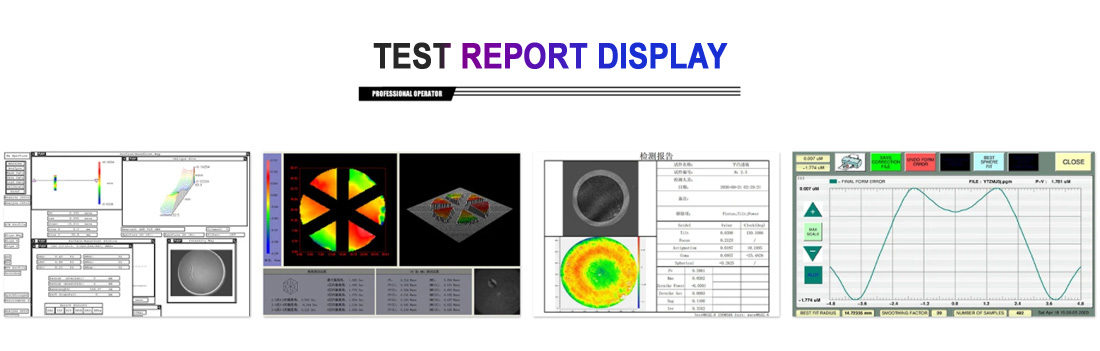
Optical Inspection: An interferometer is used to verify surface accuracy, and a spectrophotometer is used to test the transmittance curve, ensuring that optical performance meets design specifications.
Dimensional Inspection: A coordinate measuring machine and high-precision measuring tools are used to verify the tolerance compliance of key dimensions (mounting hole diameter, flange position, dome height, etc.).
Sealing Inspection: An airtightness tester or hydrostatic test is used to verify the sealing rating of the components, ensuring compliance with IP protection requirements.
Environmental Reliability Testing: Environmental simulation tests such as high and low temperature cycling, salt spray corrosion, and vibration shock are conducted to verify the product's stability under extreme operating conditions.
6. Customization Options
To meet the diverse needs of different camera systems and application scenarios, this product supports flexible customization:
Size Specifications: The diameter, thickness, and radius of curvature of the dome can be customized according to the camera lens size and field of view requirements.
Flange Structure: Mounting hole positions, flange thickness, and sealing groove structure can be designed according to customer interface requirements.
Coating Solutions: Anti-reflective coatings for different wavelengths (visible light, near-infrared, mid-infrared) are available, as well as special functional coatings such as hydrophobic, anti-fog, and abrasion-resistant coatings.
Material Selection: Different optical glass materials such as BK7, fused silica, and sapphire can be selected based on environmental tolerance levels.
For further technical details or customization options, please contact Yutai Optics for professional support.
The glass dome with stainless steel flange is a combined optical window assembly that integrates a high-performance glass dome with a stainless steel flange through a precision encapsulation process. Designed specifically for camera systems, this product provides excellent optical transmission while ensuring a reliable mechanical connection and seal with the camera housing or protective enclosure via the metal flange structure. It serves both as an optical window protecting internal precision optical components from external environmental influences and as a key component in pressure-bearing or weather-resistant systems, finding wide application in security monitoring, underwater photography, vehicle-mounted cameras, industrial vision, and outdoor imaging equipment.
2. Structural Composition
This component consists of two core parts:
Glass Dome
Made from high-quality optical glass (such as BK7, fused silica, or sapphire) through precision grinding and polishing. The dome has a hemispherical or near-spherical structure with optimized surface curvature to minimize angular deviations and aberrations affecting incident light. Its high optical profile accuracy and excellent surface finish ensure clear, distortion-free imaging quality throughout the entire aperture. Depending on the application, anti-reflective coatings (AR), hydrophobic coatings, or hard protective coatings can be applied to the inner and outer surfaces of the dome to improve transmittance or environmental resistance in specific wavelengths.
Stainless Steel Metal Flange
Made from high-quality stainless steel (such as SUS304 or SUS316L) through precision machining, possessing excellent corrosion resistance and mechanical strength. The flange is designed with ease of installation and reliable sealing in mind, typically equipped with standard holes or threads for rigid connection to the camera body, housing, or support system. The flange and glass bulb are joined by a highly reliable sealing process to ensure airtightness and watertightness at the connection. It can be adapted to O-ring seals or flat sealing structures to meet IP67 or higher protection level requirements.
3. Functional Characteristics
Optical Performance: As the first optical interface in the camera's optical path, the glass dome is designed with the imaging system's requirements for transmittance and low optical loss in mind. Precise control of the dome's surface accuracy and optical uniformity effectively avoids imaging distortion caused by spherical refraction. After applying an anti-reflective coating, transmittance in the target operating wavelength range (such as visible light 400-700nm or near-infrared band) can be significantly increased to over 95%, maximizing the consistency between the light signal intensity received by the camera sensor and the original scene.
Mechanical Protection: The dome's hemispherical structure provides excellent impact resistance, effectively dispersing point impact forces across the entire spherical surface when subjected to external impacts, reducing the risk of breakage due to localized stress concentration. The rigid connection of the stainless steel metal flange ensures the structural stability of the component under complex conditions such as vibration and impact, preventing optical path misalignment or seal failure due to relative displacement.
Sealing Protection: The sealed connection between the metal flange and the glass dome, as well as the interface sealing design between the flange end face and the camera housing, together constitute a complete protective barrier. This component effectively prevents external media such as dust, moisture, and corrosive liquids from entering the camera's interior, protecting the delicate optical sensors and electronic components and ensuring their long-term stable operation even in harsh environments.
Environmental Weather Resistance: The stainless steel material itself possesses excellent oxidation and corrosion resistance, capable of withstanding harsh environments such as high humidity, salt spray, and chemical solvents. Hydrophobic or anti-fog treatments on the glass dome surface further reduce the impact of moisture condensation and contaminant adhesion on image sharpness. The overall component typically has a temperature range of -40°C to +85°C, meeting the needs of most industrial and outdoor applications.
4. Typical Application Scenarios
|
Application Field |
Specific Applications |
|
Security & Surveillance |
Protective window for outdoor high-speed dome cameras and explosion-proof cameras; provides rainproof and dustproof protection |
|
Underwater Imaging |
Pressure-resistant window for ROVs (Remotely Operated Vehicles) and deep-sea exploration cameras; meets high-standard waterproof sealing requirements |
|
Automotive Imaging |
Protective cover for autonomous driving cameras and reverse imaging systems; resists wind, sand, and rain erosion |
|
Industrial Vision |
Protective window for inspection cameras in harsh production environments; features oil resistance and corrosion resistance |
|
Specialized Equipment |
Weather-resistant optical window for high-end imaging equipment in aerospace and other demanding applications |
5. Quality Control and Testing
During the manufacturing process, this product undergoes multiple rigorous testing procedures to ensure delivery quality:
Optical Inspection: An interferometer is used to verify surface accuracy, and a spectrophotometer is used to test the transmittance curve, ensuring that optical performance meets design specifications.
Dimensional Inspection: A coordinate measuring machine and high-precision measuring tools are used to verify the tolerance compliance of key dimensions (mounting hole diameter, flange position, dome height, etc.).
Sealing Inspection: An airtightness tester or hydrostatic test is used to verify the sealing rating of the components, ensuring compliance with IP protection requirements.
Environmental Reliability Testing: Environmental simulation tests such as high and low temperature cycling, salt spray corrosion, and vibration shock are conducted to verify the product's stability under extreme operating conditions.
6. Customization Options
To meet the diverse needs of different camera systems and application scenarios, this product supports flexible customization:
Size Specifications: The diameter, thickness, and radius of curvature of the dome can be customized according to the camera lens size and field of view requirements.
Flange Structure: Mounting hole positions, flange thickness, and sealing groove structure can be designed according to customer interface requirements.
Coating Solutions: Anti-reflective coatings for different wavelengths (visible light, near-infrared, mid-infrared) are available, as well as special functional coatings such as hydrophobic, anti-fog, and abrasion-resistant coatings.
Material Selection: Different optical glass materials such as BK7, fused silica, and sapphire can be selected based on environmental tolerance levels.
For further technical details or customization options, please contact Yutai Optics for professional support.
Share this:


PREV : Coating Solutions for Right-Angle Prisms — Determined by Your Application NEXT : How to Ensure Focal Line Uniformity of a Cylindrical Lens in a Laser Line Scanning System?
TALK TO US 86-15584132290
Call us now!
86-15584132290Call us now!

ONLINE CHAT
 2433808388
2433808388