
-
 Email: admin@ytoptics.com
-
 English Inquiry Support:
-
 Add: 2# Automotive InnovationPark,
City,Jilin Province, China
How to Choose Spherical and Cylindrical Lenses?
The costs of spherical and cylindrical lenses cannot be simply compared in terms of “which is more expensive,” because their pricing logic differs: spherical lenses are inexpensive due to the economies of scale achieved through “full-aperture self-forming,” while cylindrical lenses are more expensive because their “non-rotational symmetry” makes precise manufacturing and inspection more challenging. The key to selecting the right lens is not comparing unit prices, but determining whether your system needs to “focus on a single point” or “shape a line.”
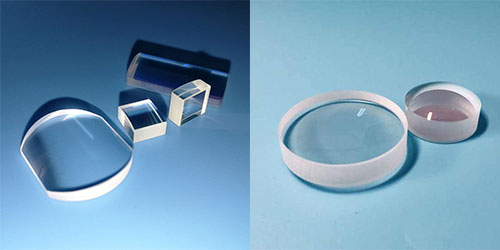
Spherical lenses serve as the cost benchmark because their manufacturing is inherently suited for large-scale production. Spherical grinding and polishing use full-diameter tools that fit perfectly against the mirror surface; as the tool and workpiece grind against each other, the tool “self-sharpens” to maintain the surface shape. A single grinding wheel can process multiple lenses simultaneously, and the process is mature with excellent repeatability. Both small-batch prototyping and mass production are handled by established production lines, allowing unit costs to be kept very low.
The geometry of cylindrical lenses disrupts this self-forming mechanism. With different curvatures in two orthogonal directions, traditional full-diameter tools cannot simultaneously conform to the entire surface; instead, they must rely on deterministic material-removal methods such as CNC polishing with small tools, magnetorheological polishing, or single-point diamond turning. This means longer processing times per piece, and measuring cylindrical surfaces is more challenging than spherical ones—while spherical surfaces can be covered using standard templates or interferometers, cylindrical surfaces (especially those with long radii or non-spherical cylindrical surfaces) often require the assistance of holographic plates or profilometers, which increases inspection costs.
However, there is one notable exception: if cylindrical lenses are mass-produced using glass molding, the cost per unit can be significantly reduced. The molding process is suitable for the large-scale manufacturing of small- to medium-sized cylindrical lenses, provided that the mold investment is made and the surface profile is not too steep. Therefore, the notion that “cylindrical lenses are necessarily expensive” only holds true in the context of cold processing or small-batch production; for mass-produced, standardized cylindrical lenses manufactured via molding, the unit price can approach that of spherical lenses.
|
Comparison Items |
Spherical Lenses |
Cylindrical Lenses |
Explanation of Cost Impact |
|
Standardized Off-the-Shelf Products |
Adequate off-the-shelf supply; large inventory of standard focal lengths |
Limited off-the-shelf supply for standard focal lengths; mostly custom-made |
Off-the-shelf spherical lenses can be purchased directly, with short lead times and the lowest unit price; cylindrical lenses mostly require separate production scheduling |
|
Standard Precision (N=4–6, S/D 40–20) |
1.0 |
2.2–3.5 |
Specialized cylindrical grinding wheels, custom polishing pads, and generatrix inspection—more processes with a high proportion of manual machine adjustment
|
|
High Precision (N=1–2, S/D 20–10) |
1.8–2.5 |
4.5–7 |
Cylindrical surfaces lack the self-averaging effect of polishing; repeated profiling and per-piece generatrix inspection result in a lower yield rate |
|
Inspection Costs |
Only radius of curvature, surface profile, center thickness, and diameter |
Radius of curvature, surface profile, generatrix parallelism, cylindrical axis azimuth, wedge shape, and straightness |
Cylindrical surface inspection requires cylindrical interference fixtures and angle fixtures, increasing inspection labor time by 2–4 times |
Spherical and cylindrical lenses address two different types of problems. When selecting a lens, there’s no need to agonize over which is “better”; instead, focus on the requirements of the optical path.
(1) Choose a spherical lens when your target is a “point”
A spherical lens applies the same focal power to the beam in both directions, converging parallel light into a point (or collimate a beam from a point source into a circular beam). If your system involves conventional imaging, laser focusing, fiber coupling, or basic collimation, a spherical lens is the default starting point. Even if spherical aberration is present, it can be managed by selecting an appropriate meniscus shape, high-refractive-index materials, or adding a correction lens—all while keeping costs under control. Plano-convex lenses are suitable for infinity-conjugate applications (collimating or focusing parallel light), while biconvex lenses are suitable for symmetrical imaging where the object-image ratio is close to 1:1.
(2) Choose a cylindrical lens when your goal is a “line” or “shape”
Cylindrical lenses focus light in only one direction, while maintaining divergence or collimation in the other direction. Typical applications include: shaping a circular laser beam into a line spot for scanning or illumination; correcting the asymmetric divergence angles of a semiconductor laser’s fast and slow axes; or compressing or expanding a beam in a one-dimensional direction. If your optical path requires “focal power in only one direction,” no combination of spherical lenses can replace the functionality of a cylindrical lens—forcing a spherical-cylindrical combination to simulate this will only increase the number of elements and the complexity of alignment and adjustment.
(3) If both options can fulfill the function, prioritize spherical lenses.
For example, for a simple line-focusing requirement, if the system has ample space and the linewidth requirements are not stringent, using a single cylindrical lens is certainly the most straightforward approach; however, if this “line” is merely an intermediate step in an imaging optical path, a similar effect might be achieved using a spherical lens combined with a slit aperture at a lower cost. Conversely, if a cylindrical lens can reduce the number of components in the subsequent optical path (such as using a single cylindrical lens to replace two spherical lenses for one-dimensional beam expansion), then the higher unit cost of the cylindrical lens may be offset by the system’s total cost.
3. An Easily Overlooked Selection Criterion: Batch Size and Manufacturing Process
For the same cylindrical lens, the cost curves for small-batch cold-forming and large-batch mold-pressing are completely different. If you only need a few to several dozen pieces, having a cold-forming manufacturer custom-make them to your specifications will result in a higher unit price but requires no mold investment; if your annual consumption reaches several thousand pieces or more, and the dimensions fall within the mold-pressing process window (typically small to medium apertures), it may be more cost-effective to create a mold and use glass mold-pressing. Spherical lenses do not present this dichotomy—cold forming has established processes for quantities ranging from a single piece to tens of thousands, while mold-pressing offers cost advantages only for high-volume plastic lenses or specific glass grades.
Therefore, when selecting lenses for a project, first confirm whether the functional requirement is “point” or “line,” then match the production route to the estimated volume, and only then compare quotes. Simply asking, “Which is cheaper, spherical or cylindrical?” may yield an answer that isn’t necessarily applicable to your project.
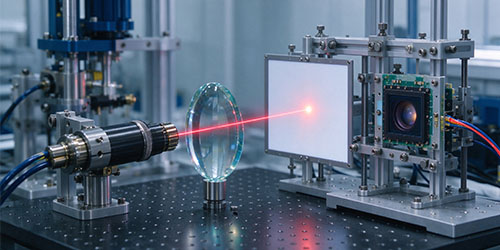
Yutai Optics is a professional manufacturer of optical components, offering custom fabrication and corresponding inspection services for precision optical components such as spherical and cylindrical lenses. We welcome project teams to engage in technical discussions and explore collaboration opportunities.


NEXT : Coordinated Control of Surface Profile Accuracy and Surface Quality in the Manufacturing of Optical
 86-15584132290
Call us now!

 2433808388