ISO9001 Certified Professional Manufacturer & Supplier of Optics
+86-0431-87911611 admin@ytoptics.com

Contact us
-
 Email: admin@ytoptics.com
-
 English Inquiry Support:
-
 Add: 2# Automotive InnovationPark,
City,Jilin Province, China
When Do You Need a Plano-Concave Lens?
If you've ever worked on beam expansion or aberration correction, your first instinct was probably to reach for a plano-convex or bi-convex lens. But what about a plano-concave lens? It is often overlooked—yet in certain applications, it is exactly the optical element you need.
What Is a Spherical Plano-Concave Lens?
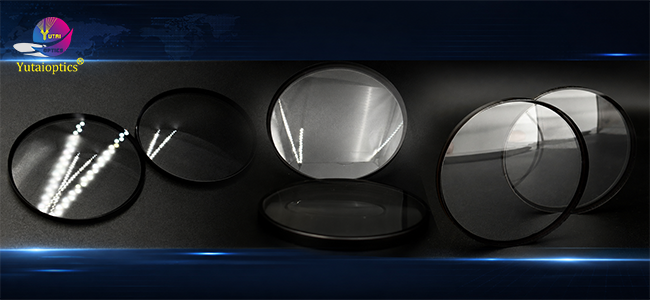
A spherical plano-concave lens has one flat surface and one concave spherical surface. It possesses negative optical power, meaning that it causes incoming parallel light rays to diverge rather than converge.
Sounds simple, right? However, it is precisely this ability to diverge light that makes plano-concave lenses indispensable in
the following four situations.
Scenario 1: You Need Beam Expansion Without Changing the Beam Direction
Laser beams are typically narrow when emitted, but many applications—such as laser processing, LiDAR, and projection
systems—require larger beam diameters.
A plano-convex lens can expand a beam, but the optical path converges and requires additional elements for collimation.
By using a plano-concave lens as the first element to diverge the beam, followed by a second lens for collimation, you
create the front end of a classic Galilean or Keplerian beam expander.
Key Advantage: A plano-concave lens provides controllable negative optical power, allowing precise adjustment of the
expansion ratio while maintaining the original beam direction.
Scenario 2: You Need to Correct Spherical Aberration Without Adding Complex Optics
In imaging systems, spherical aberration causes marginal rays and paraxial rays to focus at different points, resulting in
blurred images.
Convex lenses inherently introduce positive spherical aberration. The negative spherical aberration generated by a
plano-concave lens can help compensate for it.
Key Advantage: Pairing a plano-concave lens with a convex lens can effectively neutralize spherical aberration without
requiring a more complex optical assembly, reducing both cost and system complexity.
Scenario 3: You Need a Longer Effective Focal Length but Have Limited Space
The overall length of an optical system is often constrained by mechanical design. What if you need a longer effective
focal length without increasing the physical length of the system?
By incorporating a negative lens (such as a plano-concave lens) into the optical path, the effective focal length of the
optical assembly can be increased while keeping the system length unchanged.
Key Advantage: Gain a longer equivalent focal length without extending the physical system length—an especially valuable
feature in compact optical designs.
Scenario 4: You Need to Create a Line Spot or Achieve Uniform Illumination
Cylindrical lenses are the primary choice for generating line-shaped beams, but spherical plano-concave lenses can also play
an important role.
In applications where a point source must be spread into a more uniform illumination pattern, a plano-concave lens can diverge
the beam to a specified angle and work together with integrating spheres or diffusers. In projection systems, plano-concave
lenses can also be used to optimize illumination uniformity.
Key Advantage: Negative optical power enables light to be spread out rather than concentrated.
What Should You Consider When Selecting a Plano-Concave Lens?
If you decide to use a plano-concave lens, pay close attention to the following parameters:
What Is a Spherical Plano-Concave Lens?
A spherical plano-concave lens has one flat surface and one concave spherical surface. It possesses negative optical power, meaning that it causes incoming parallel light rays to diverge rather than converge.
|
Feature |
Optical Effect |
|
Negative focal length |
Causes light beams to diverge |
|
Concave spherical surface |
Introduces controllable spherical aberration (useful for balancing other aberrations) |
|
Asymmetric design |
Can be paired with convex lenses for aberration correction |
Sounds simple, right? However, it is precisely this ability to diverge light that makes plano-concave lenses indispensable in
the following four situations.
Scenario 1: You Need Beam Expansion Without Changing the Beam Direction
Laser beams are typically narrow when emitted, but many applications—such as laser processing, LiDAR, and projection
systems—require larger beam diameters.
A plano-convex lens can expand a beam, but the optical path converges and requires additional elements for collimation.
By using a plano-concave lens as the first element to diverge the beam, followed by a second lens for collimation, you
create the front end of a classic Galilean or Keplerian beam expander.
Key Advantage: A plano-concave lens provides controllable negative optical power, allowing precise adjustment of the
expansion ratio while maintaining the original beam direction.
Scenario 2: You Need to Correct Spherical Aberration Without Adding Complex Optics
In imaging systems, spherical aberration causes marginal rays and paraxial rays to focus at different points, resulting in
blurred images.
Convex lenses inherently introduce positive spherical aberration. The negative spherical aberration generated by a
plano-concave lens can help compensate for it.
Key Advantage: Pairing a plano-concave lens with a convex lens can effectively neutralize spherical aberration without
requiring a more complex optical assembly, reducing both cost and system complexity.
Scenario 3: You Need a Longer Effective Focal Length but Have Limited Space
The overall length of an optical system is often constrained by mechanical design. What if you need a longer effective
focal length without increasing the physical length of the system?
By incorporating a negative lens (such as a plano-concave lens) into the optical path, the effective focal length of the
optical assembly can be increased while keeping the system length unchanged.
Key Advantage: Gain a longer equivalent focal length without extending the physical system length—an especially valuable
feature in compact optical designs.
Scenario 4: You Need to Create a Line Spot or Achieve Uniform Illumination
Cylindrical lenses are the primary choice for generating line-shaped beams, but spherical plano-concave lenses can also play
an important role.
In applications where a point source must be spread into a more uniform illumination pattern, a plano-concave lens can diverge
the beam to a specified angle and work together with integrating spheres or diffusers. In projection systems, plano-concave
lenses can also be used to optimize illumination uniformity.
Key Advantage: Negative optical power enables light to be spread out rather than concentrated.
What Should You Consider When Selecting a Plano-Concave Lens?
If you decide to use a plano-concave lens, pay close attention to the following parameters:
|
Parameter |
Why It Matters |
|
Material |
Determines transmission range and thermal stability. Low-dispersion materials such as S-FPL51 perform exceptionally well in the VIS-NIR spectrum |
|
Diameter |
Larger diameters collect more light but also increase system size |
|
Center Thickness |
If too thin, the lens may deform; if too thick, weight and absorption increase |
|
Coating |
Uncoated lenses offer greater flexibility and customization options; anti-reflection coatings reduce reflection losses |
|
Edge Treatment |
Blackened edges effectively suppress stray light and improve signal-to-noise ratio |
Conclusion
A plano-concave lens is rarely the star of an optical system. Instead, it acts more like a supporting component—but one
that can solve critical challenges such as beam expansion, aberration correction, focal length adjustment, and beam shaping.
The next time you encounter a beam that is difficult to collimate or expand, ask yourself: Could a plano-concave lens be
the missing piece in my optical design?
A plano-concave lens is rarely the star of an optical system. Instead, it acts more like a supporting component—but one
that can solve critical challenges such as beam expansion, aberration correction, focal length adjustment, and beam shaping.
The next time you encounter a beam that is difficult to collimate or expand, ask yourself: Could a plano-concave lens be
the missing piece in my optical design?
Share this:


PREV : Comparison of the Overall Performance of H-LAK72 and N-BK7 Optical Glass NEXT : The Appropriate Positioning of K9 Optical Glass in Precision Optical Components
TALK TO US 86-15584132290
Call us now!
86-15584132290Call us now!

ONLINE CHAT
 2433808388
2433808388