ISO9001 Certified Professional Manufacturer & Supplier of Optics
+86-0431-87911611 admin@ytoptics.com

Contact us
-
 Email: admin@ytoptics.com
-
 English Inquiry Support:
-
 Add: 2# Automotive InnovationPark,
City,Jilin Province, China
Key parameters of infrared transmission materials: transmittance
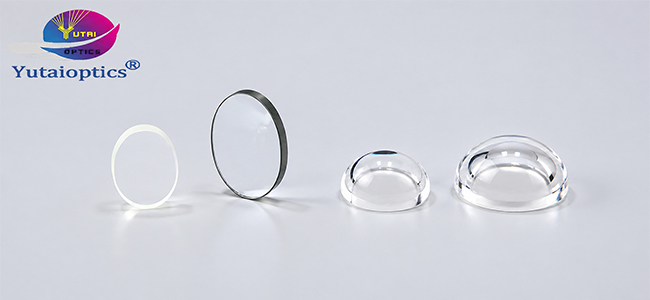
The core function of infrared-transmitting materials is to enable the efficient transmission of infrared radiation signals. “Transmittance” (commonly denoted by T) serves as the key metric for quantifying this function; it directly determines the detection accuracy, signal loss, and imaging quality of infrared optical systems. It is the primary basis for selecting and evaluating the performance of optical components such as infrared windows, lenses, and prisms, and it is also the most critical testing parameter in the research, development, and production of infrared materials.
I. What is infrared transmittance?
Infrared transmittance refers to the ratio of the intensity of transmitted light to the intensity of incident light after infrared electromagnetic waves pass through an infrared-transmitting material. It is usually expressed as a percentage (%). Essentially, it is a quantification of the material's ability to transmit infrared light, reflecting the degree of energy loss when infrared light propagates in the material.
Its core correlation follows the law of energy conservation: T + R + A = 1 (where T is transmittance, R is reflectance, and A is absorptivity), that is, of the energy of incident infrared light, part is transmitted through the material, part is reflected by the surface, and part is absorbed by the interior of the material, and the sum of the three is 1.
II. Typical Range of Infrared Transmittance for Infrared-Transmitting Materials
1. High-transmittance materials (T ≥ 90%): Suitable for high-precision optical systems, such as high-end lenses, spectrometer windows, and laser lenses, which require extremely low light loss and demand high material purity with no significant internal defects.
2. Medium transmittance materials (80% ≤ T < 90%): Suitable for general-purpose optical components, such as standard lenses and civilian optical windows, meeting everyday light transmission requirements while offering high cost-effectiveness.
3. Low transmittance materials (T < 80%): Suitable only for applications with low light transmission requirements, such as light-blocking filters, decorative optical components, or special applications where light transmission needs to be intentionally reduced.
III. Key Factors Affecting the Transmittance of Infrared-Transmitting Materials
1. Chemical Composition and Purity of the Material:
Impurities and defects within the material (such as bubbles, cracks, and impurity ions) enhance the absorption and scattering of infrared light, significantly reducing transmittance. High-purity raw materials are essential for achieving high transmittance. Arsenic-free chalcogenide glasses effectively eliminate infrared absorption peaks and improve transmittance by removing arsenic impurities.
2. Surface condition of the material:
Surface roughness and flatness directly affect reflection loss. The smoother and flatter the surface, the lower the reflection loss and the higher the transmittance; conversely, a rough surface causes diffuse reflection of infrared light, increasing energy loss. Additionally, surface scratches and stains also reduce transmittance.
3. Surface Coating Process:
Infrared materials inherently exhibit surface reflection loss (uncoated glass surfaces have a reflection loss of approximately 4% per side). By applying an infrared anti-reflection (AR) coating, reflection loss can be effectively suppressed, increasing transmittance by 5% to 10%. This is a key method for optimizing transmission performance.
4. Test Conditions and Environment:
Infrared wavelength, test temperature, and humidity all affect the results. Testing standards typically specify a particular infrared band (such as the 3–5 μm mid-wave or 8–12 μm long-wave bands) and are conducted at room temperature (25°C) in a dry environment to ensure the accuracy and comparability of the test results.
IV. How to measure infrared transmittance?
The commonly used instrument is an infrared spectrometer, and its basic steps are as follows:
1. Cut the infrared-transmitting material sample to be tested (window, lens blank, etc.) to a standard size, clean the surface, and ensure there are no scratches or stains.
2. Start the infrared spectrometer, set the test wavelength (e.g., 2~15μm), and first acquire the blank background spectrum (incident light intensity without a sample).
3. Place the sample in the test optical path, acquire the sample spectrum (transmitted light intensity), and the instrument automatically calculates the transmittance values at different wavelengths.
4. For accuracy, it is usually necessary to measure multiple times at different locations on the sample and take the average value to plot the transmittance-wavelength curve, thus clarifying the sample's transmittance performance in the target wavelength band.
Summary
|
|
Details |
|
Definition |
The ability of infrared light to pass through a material is measured by the ratio of the transmitted light intensity to the incident light intensity. |
|
Scope |
Ordinary infrared materials: 70%~85%; High-performance materials: ≥85% (high-quality materials can reach over 98%). |
|
Influencing factors |
Material purity (chemical composition) is fundamental, while surface condition and coating process are key optimization methods. |
|
Measurement Method |
The main method involves testing with a Fourier Transmission Infrared Spectrometer (FTIR), taking multiple measurements and averaging the results. |
|
Function |
It is a core quantitative parameter for evaluating the optical performance of infrared materials and screening infrared optical components. |
Therefore, when discussing the optical properties of infrared-transmitting materials, “transmittance” is a key parameter that must be addressed. A successful infrared optical component design involves using high-purity materials and optimizing surface conditions and coating processes to achieve high and stable transmittance, thereby meeting the infrared detection and imaging requirements of various applications.
Share this:


PREV : Changchun Yutai Optics has officially moved into the Automotive Innovation Park, Liando U Valley NEXT : A ‘thinner’ lens is not necessarily simpler
TALK TO US 86-15584132290
Call us now!
86-15584132290Call us now!

ONLINE CHAT
 2433808388
2433808388