ISO9001 Certified Professional Manufacturer & Supplier of Optics
+86-0431-87911611 admin@ytoptics.com

Contact us
-
 Email: admin@ytoptics.com
-
 English Inquiry Support:
-
 Add: 2# Automotive InnovationPark,
City,Jilin Province, China
A ‘thinner’ lens is not necessarily simpler
In sectors such as consumer electronics, automotive sensing, medical imaging and industrial lasers, ‘slimness’ has become a core requirement in product design. It is widely believed in the market that the thinner a lens is, the lower its cost and the easier it is to manufacture. However, the fundamental principles of optical engineering reveal a different reality: achieving thin lenses is never simply a matter of reducing physical dimensions, but rather requires collaborative breakthroughs across multiple disciplines and the striking of a delicate balance.
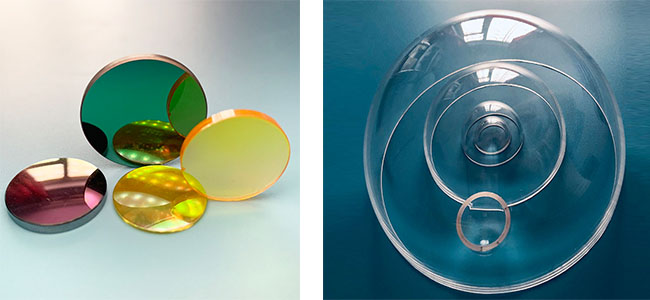 I. Why is it that “the thinner it is, the harder it is”?
Traditional optical systems rely on combinations of multiple lenses to correct aberrations, whereas achieving optimal performance with a minimal number of components—a key requirement for miniaturization—poses a significant challenge to the three core aspects of optical engineering.
1. There is insufficient room to correct aberrations
Thin lenses have limited physical space, which significantly restricts the “maneuvering room” for aberration correction; as a result, a single element must perform more optical functions, making the task considerably more challenging.
- Traditional approach: Similar to a multi-person division of labor, the lens groups in the iPhone 6 and 7 utilize a combination of multiple lenses made of different materials and with varying curvatures, each designed to correct one or more types of aberrations. Even if a single lens has an error, it can be compensated for by the other lenses, making image quality easier to control.
- The Challenge of Thin Lenses: When lens thickness is reduced to less than 1 mm, the surface must be more curved to ensure proper imaging, which exacerbates aberrations. Furthermore, a single thin lens cannot be individually calibrated; correcting one type of aberration often affects others, requiring special coatings or composite structures to compensate.
- Yutai Solution: By utilizing professional design software such as Zemax to optimize the surface profiles of thin lenses (e.g., aspheric surfaces) and combining this with precision coating technology, we simultaneously correct aberrations and reduce reflections within a limited thickness, thereby breaking the myth that “thinner lenses result in worse aberrations.”
2. High standards for materials and processing
Thin lenses place far higher demands on materials and manufacturing processes than thick lenses; the uniformity and strength of the materials, as well as the precision of the manufacturing process, directly determine the product’s yield rate.
- Material constraints: When lenses are made thin, the inherent properties of the material become critical. For example, in the case of thin fused silica lenses, internal stress must be kept below 20 ppm; otherwise, they are prone to deformation. In the infrared spectrum, thin lenses must also balance high transmittance with low absorption, further limiting the available material options.
- Technical Challenges: Thin lenses are both thin and brittle, making them prone to cracking and difficult to grind to a smooth finish. Take a lens with a diameter of 10 mm and a thickness of 0.8 mm as an example: both ends must be kept parallel, with an error margin not exceeding ±1′, which places extremely high demands on both equipment and operators.
- Yutai Solution: By employing precision CNC grinding and magnetorheological polishing technologies, combined with an online inspection and calibration system, and pre-treating materials to eliminate stress, we maintain a mass production yield rate of over 90% for thin lenses.
3. More complex assembly
Thin lenses must be mounted within device modules; far from simplifying the assembly process, their thinness actually introduces numerous “hidden challenges,” placing higher demands on assembly, packaging, and collaborative design.
- Assembly Challenges: Thin lenses are fragile, so they must be “secured firmly without being damaged” during assembly. For example, thin lenses used in automotive LiDAR (thickness < 2 mm) must withstand extreme environments ranging from -40°C to 85°C; the encapsulation material must match the lens’s thermal expansion and contraction properties and also be vibration-resistant.
- Synergy Requirements: In products such as smartphones and AR/VR devices, thin lenses must work in conjunction with software algorithms to compensate for uncorrected aberrations. This requires that optical and algorithmic design be advanced in parallel to ensure perfect alignment.
II. Typical Applications of Slim-Profile Design
1. Consumer Electronics: Balancing Ultra-Slim Design with High-Quality Imaging
The key requirements in this sector are “flush-mounted” smartphone cameras and lightweight AR/VR devices. Smartphone main cameras must achieve ≥100 million pixels within a thickness of <5 mm, while AR glasses require lens thicknesses of <1 mm and a field of view (FOV) of >120°. Currently, ultra-precise aspheric lenses and metasurface lens technology enable high-quality imaging in slim and lightweight designs, driving product form factor innovation.
2. Automotive and Industrial Applications: Dual Breakthroughs in Environmental Resistance and High Precision
Automotive LiDAR systems require thin lenses that can withstand extreme temperatures and vibrations, while industrial machine vision systems require thin lenses with low distortion and high precision. Through the use of materials resistant to high and low temperatures and precision structural design, these solutions can meet the demands of complex automotive operating conditions and industrial-grade micron-level inspection requirements.
3. Medical Field: The Synergy of Minimally Invasive Technology and High Resolution
Endoscopes require ultra-thin lens assemblies with a diameter of less than 5 mm and a total thickness of less than 8 mm, while maintaining high resolution. By employing miniature achromatic lens designs and biocompatible materials, it is possible to meet the dual requirements of minimally invasive procedures and high image clarity.
As technology evolves, Yutai Optics will remain committed to its founding spirit of innovation, leveraging its professional expertise to drive the development of lightweight optical solutions. By bringing more compact and efficient optical systems to a wider range of applications, the company aims to empower the upgrading of downstream industries while showcasing the technical prowess and innovative value of Chinese optical enterprises, thereby writing a new chapter in the development of lightweight optics.
Traditional optical systems rely on combinations of multiple lenses to correct aberrations, whereas achieving optimal performance with a minimal number of components—a key requirement for miniaturization—poses a significant challenge to the three core aspects of optical engineering.
1. There is insufficient room to correct aberrations
Thin lenses have limited physical space, which significantly restricts the “maneuvering room” for aberration correction; as a result, a single element must perform more optical functions, making the task considerably more challenging.
- Traditional approach: Similar to a multi-person division of labor, the lens groups in the iPhone 6 and 7 utilize a combination of multiple lenses made of different materials and with varying curvatures, each designed to correct one or more types of aberrations. Even if a single lens has an error, it can be compensated for by the other lenses, making image quality easier to control.
- The Challenge of Thin Lenses: When lens thickness is reduced to less than 1 mm, the surface must be more curved to ensure proper imaging, which exacerbates aberrations. Furthermore, a single thin lens cannot be individually calibrated; correcting one type of aberration often affects others, requiring special coatings or composite structures to compensate.
- Yutai Solution: By utilizing professional design software such as Zemax to optimize the surface profiles of thin lenses (e.g., aspheric surfaces) and combining this with precision coating technology, we simultaneously correct aberrations and reduce reflections within a limited thickness, thereby breaking the myth that “thinner lenses result in worse aberrations.”
2. High standards for materials and processing
Thin lenses place far higher demands on materials and manufacturing processes than thick lenses; the uniformity and strength of the materials, as well as the precision of the manufacturing process, directly determine the product’s yield rate.
- Material constraints: When lenses are made thin, the inherent properties of the material become critical. For example, in the case of thin fused silica lenses, internal stress must be kept below 20 ppm; otherwise, they are prone to deformation. In the infrared spectrum, thin lenses must also balance high transmittance with low absorption, further limiting the available material options.
- Technical Challenges: Thin lenses are both thin and brittle, making them prone to cracking and difficult to grind to a smooth finish. Take a lens with a diameter of 10 mm and a thickness of 0.8 mm as an example: both ends must be kept parallel, with an error margin not exceeding ±1′, which places extremely high demands on both equipment and operators.
- Yutai Solution: By employing precision CNC grinding and magnetorheological polishing technologies, combined with an online inspection and calibration system, and pre-treating materials to eliminate stress, we maintain a mass production yield rate of over 90% for thin lenses.
3. More complex assembly
Thin lenses must be mounted within device modules; far from simplifying the assembly process, their thinness actually introduces numerous “hidden challenges,” placing higher demands on assembly, packaging, and collaborative design.
- Assembly Challenges: Thin lenses are fragile, so they must be “secured firmly without being damaged” during assembly. For example, thin lenses used in automotive LiDAR (thickness < 2 mm) must withstand extreme environments ranging from -40°C to 85°C; the encapsulation material must match the lens’s thermal expansion and contraction properties and also be vibration-resistant.
- Synergy Requirements: In products such as smartphones and AR/VR devices, thin lenses must work in conjunction with software algorithms to compensate for uncorrected aberrations. This requires that optical and algorithmic design be advanced in parallel to ensure perfect alignment.
II. Typical Applications of Slim-Profile Design
1. Consumer Electronics: Balancing Ultra-Slim Design with High-Quality Imaging
The key requirements in this sector are “flush-mounted” smartphone cameras and lightweight AR/VR devices. Smartphone main cameras must achieve ≥100 million pixels within a thickness of <5 mm, while AR glasses require lens thicknesses of <1 mm and a field of view (FOV) of >120°. Currently, ultra-precise aspheric lenses and metasurface lens technology enable high-quality imaging in slim and lightweight designs, driving product form factor innovation.
2. Automotive and Industrial Applications: Dual Breakthroughs in Environmental Resistance and High Precision
Automotive LiDAR systems require thin lenses that can withstand extreme temperatures and vibrations, while industrial machine vision systems require thin lenses with low distortion and high precision. Through the use of materials resistant to high and low temperatures and precision structural design, these solutions can meet the demands of complex automotive operating conditions and industrial-grade micron-level inspection requirements.
3. Medical Field: The Synergy of Minimally Invasive Technology and High Resolution
Endoscopes require ultra-thin lens assemblies with a diameter of less than 5 mm and a total thickness of less than 8 mm, while maintaining high resolution. By employing miniature achromatic lens designs and biocompatible materials, it is possible to meet the dual requirements of minimally invasive procedures and high image clarity.
As technology evolves, Yutai Optics will remain committed to its founding spirit of innovation, leveraging its professional expertise to drive the development of lightweight optical solutions. By bringing more compact and efficient optical systems to a wider range of applications, the company aims to empower the upgrading of downstream industries while showcasing the technical prowess and innovative value of Chinese optical enterprises, thereby writing a new chapter in the development of lightweight optics.
Share this:


PREV : Key parameters of infrared transmission materials: transmittance NEXT : Guide to the Structural Characteristics and Applications of Fresnel Lenses
TALK TO US 86-15584132290
Call us now!
86-15584132290Call us now!

ONLINE CHAT
 2433808388
2433808388