ISO9001 Certified Professional Manufacturer & Supplier of Optics
+86-0431-87911611 admin@ytoptics.com

Contact us
-
 Email: admin@ytoptics.com
-
 English Inquiry Support:
-
 Add: 2# Automotive InnovationPark,
City,Jilin Province, China
Advantages of Dielectric HR Mirrors
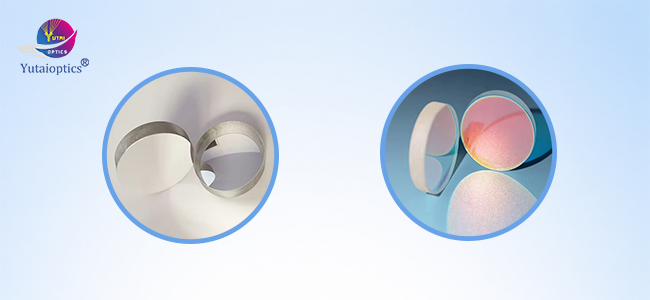
With the widespread adoption of 1064nm laser systems in industrial processing, medical aesthetics, scientific research and testing, Dielectric HR Mirrors, as the core control element of the optical path, have completely replaced traditional metal reflectors and become the industry standard. Their core advantage stems from the interference and reflection principle of multilayer dielectric films—by alternately depositing high and low refractive index dielectric materials on the surface of the optical substrate, they fundamentally solve the performance shortcomings of metallic mirrors, perfectly meeting the stringent requirements of high-power, high-precision laser systems.
I. High Power Adaptation
The core competitiveness of Dielectric HR Mirrors lies in their simultaneous possession of ultra-high reflectivity, extremely low energy loss, and ultra-high laser damage threshold—a performance combination that traditional metallic mirrors cannot achieve simultaneously.
At a wavelength of 1064nm, Dielectric HR Mirrors can achieve ultra-high reflectivity of 99.5%~99.9%, with total absorption and scattering losses controlled below 0.1%, and high-end customized products achieving losses as low as 50ppm. In contrast, metallic mirrors such as gold, silver, and aluminum have reflectivity of only 94%~98% and suffer from unavoidable intrinsic absorption losses of 1%~5%. This difference is amplified exponentially in laser resonators: the low-loss characteristics of dielectric mirrors can significantly improve the Q value of the resonator, increasing the system output efficiency by 5%~10%, while simultaneously reducing energy absorption converted into heat at the source, effectively suppressing thermal lensing effects and beam distortion.
More importantly, dielectric mirrors possess a laser damage threshold far exceeding that of metal mirrors. Under 1064nm, 10ns pulse conditions, their damage threshold typically reaches 30-50 J/cm², with high-end products exceeding 100 J/cm², more than 15 times that of metal mirrors (<2 J/cm²). This enables them to stably support the long-term continuous operation of high-power laser systems ranging from hundreds of watts to kilowatts, avoiding faults such as film burn-in, speckle formation, and film peeling, significantly reducing downtime for maintenance and substantially improving industrial production efficiency.
II. Multi-scenario compatibility
Dielectric HR Mirrors can not only efficiently transmit laser energy, but also precisely maintain beam quality and achieve flexible wavelength control, enabling them to meet diverse application needs from basic scientific research to precision manufacturing.
The reflection mechanism based on the principle of interference ensures that dielectric mirrors produce almost no phase disturbance or wavefront distortion to the laser beam, perfectly preserving the collimation, monochromaticity, and Gaussian distribution characteristics of the laser. In contrast, metallic mirrors, due to Goos-Hänchen displacement and phase delay, accumulate aberrations after multiple reflections, leading to decreased beam focusing accuracy and blurred edges. This advantage enables 1064nm laser systems to achieve micron-level machining precision in microfabrication, more accurate tissue cutting in ophthalmic surgery, and greater detection range and higher resolution in lidar systems.
Meanwhile, by precisely designing the combination of film layers, thickness, and refractive index, Dielectric HR Mirrors can achieve various optical properties such as "single-wavelength high reflectivity," "multi-wavelength high reflectivity," and "dual-color transmission and reflection." For example, in a frequency doubling optical path, it can be designed as a dual-color mirror with "1064nm high reflectivity and 532nm high transmission," efficiently separating the fundamental frequency light and the frequency-doubled light; in a resonant cavity, it can be designed as a narrow-band high-reflectivity mirror, effectively suppressing stray light oscillations. This flexible wavelength selectivity greatly expands the application boundaries of 1064nm laser systems.
III. Long-term reliability
In complex and harsh environments such as industrial production, the environmental stability and lifespan of optical components directly determine the operating cost and reliability of the system. Dielectric HR Mirrors, with their dense and stable multilayer dielectric film structure, exhibit environmental adaptability and long lifespan characteristics far exceeding those of metallic mirrors.
Traditional metallic mirrors are chemically reactive and easily corroded by pollutants such as oxygen, water vapor, and sulfides in the air. Without a protective silver coating, their lifespan is only a few months in high-humidity industrial environments. Even with a protective silver coating, the reflectivity will drop from 96% to below 94% after a few years. In contrast, dielectric mirrors use chemically stable materials such as SiO₂ and Ta₂O₅. Their coatings are highly hard, wear-resistant, moisture-resistant, and oxidation-resistant. Even after operating for 1000 hours in a harsh environment of 85°C/85% RH, their optical performance shows no significant degradation.
Yutai Optics' Dielectric HR Mirrors have a lifespan of tens of thousands of hours, which is 5 to 10 times that of metallic mirrors. Although their initial purchase cost is slightly higher than that of metal reflectors, from a life-cycle perspective, lower maintenance costs, longer replacement cycles, and less downtime can significantly reduce the total cost of ownership of the system, bringing greater economic benefits to users.
I. High Power Adaptation
The core competitiveness of Dielectric HR Mirrors lies in their simultaneous possession of ultra-high reflectivity, extremely low energy loss, and ultra-high laser damage threshold—a performance combination that traditional metallic mirrors cannot achieve simultaneously.
At a wavelength of 1064nm, Dielectric HR Mirrors can achieve ultra-high reflectivity of 99.5%~99.9%, with total absorption and scattering losses controlled below 0.1%, and high-end customized products achieving losses as low as 50ppm. In contrast, metallic mirrors such as gold, silver, and aluminum have reflectivity of only 94%~98% and suffer from unavoidable intrinsic absorption losses of 1%~5%. This difference is amplified exponentially in laser resonators: the low-loss characteristics of dielectric mirrors can significantly improve the Q value of the resonator, increasing the system output efficiency by 5%~10%, while simultaneously reducing energy absorption converted into heat at the source, effectively suppressing thermal lensing effects and beam distortion.
More importantly, dielectric mirrors possess a laser damage threshold far exceeding that of metal mirrors. Under 1064nm, 10ns pulse conditions, their damage threshold typically reaches 30-50 J/cm², with high-end products exceeding 100 J/cm², more than 15 times that of metal mirrors (<2 J/cm²). This enables them to stably support the long-term continuous operation of high-power laser systems ranging from hundreds of watts to kilowatts, avoiding faults such as film burn-in, speckle formation, and film peeling, significantly reducing downtime for maintenance and substantially improving industrial production efficiency.
II. Multi-scenario compatibility
Dielectric HR Mirrors can not only efficiently transmit laser energy, but also precisely maintain beam quality and achieve flexible wavelength control, enabling them to meet diverse application needs from basic scientific research to precision manufacturing.
The reflection mechanism based on the principle of interference ensures that dielectric mirrors produce almost no phase disturbance or wavefront distortion to the laser beam, perfectly preserving the collimation, monochromaticity, and Gaussian distribution characteristics of the laser. In contrast, metallic mirrors, due to Goos-Hänchen displacement and phase delay, accumulate aberrations after multiple reflections, leading to decreased beam focusing accuracy and blurred edges. This advantage enables 1064nm laser systems to achieve micron-level machining precision in microfabrication, more accurate tissue cutting in ophthalmic surgery, and greater detection range and higher resolution in lidar systems.
Meanwhile, by precisely designing the combination of film layers, thickness, and refractive index, Dielectric HR Mirrors can achieve various optical properties such as "single-wavelength high reflectivity," "multi-wavelength high reflectivity," and "dual-color transmission and reflection." For example, in a frequency doubling optical path, it can be designed as a dual-color mirror with "1064nm high reflectivity and 532nm high transmission," efficiently separating the fundamental frequency light and the frequency-doubled light; in a resonant cavity, it can be designed as a narrow-band high-reflectivity mirror, effectively suppressing stray light oscillations. This flexible wavelength selectivity greatly expands the application boundaries of 1064nm laser systems.
III. Long-term reliability
In complex and harsh environments such as industrial production, the environmental stability and lifespan of optical components directly determine the operating cost and reliability of the system. Dielectric HR Mirrors, with their dense and stable multilayer dielectric film structure, exhibit environmental adaptability and long lifespan characteristics far exceeding those of metallic mirrors.
Traditional metallic mirrors are chemically reactive and easily corroded by pollutants such as oxygen, water vapor, and sulfides in the air. Without a protective silver coating, their lifespan is only a few months in high-humidity industrial environments. Even with a protective silver coating, the reflectivity will drop from 96% to below 94% after a few years. In contrast, dielectric mirrors use chemically stable materials such as SiO₂ and Ta₂O₅. Their coatings are highly hard, wear-resistant, moisture-resistant, and oxidation-resistant. Even after operating for 1000 hours in a harsh environment of 85°C/85% RH, their optical performance shows no significant degradation.
Yutai Optics' Dielectric HR Mirrors have a lifespan of tens of thousands of hours, which is 5 to 10 times that of metallic mirrors. Although their initial purchase cost is slightly higher than that of metal reflectors, from a life-cycle perspective, lower maintenance costs, longer replacement cycles, and less downtime can significantly reduce the total cost of ownership of the system, bringing greater economic benefits to users.
Summary Table
|
|
Dielectric HR Mirrors |
Traditional Metallic Mirrors |
Impact on 1064nm laser systems |
|
Reflectivity |
99.5%~99.9% |
94%~98% |
Dielectric HR Mirrors: higher output efficiency and less energy loss |
|
Total loss |
<0.1% |
1%~5% |
Dielectric HR Mirrors:The thermal lensing effect is smaller, resulting in a more stable beam |
|
Laser damage threshold |
30~50 J/cm²(10ns) |
<2 J/cm² |
Dielectric HR Mirrors:It can support long-term high-power operation |
|
Wavefront distortion |
Extremely small |
More obvious |
Dielectric HR Mirrors:High focusing accuracy and good processing quality |
|
Wavelength selectivity |
Precisely customizable |
Broadband reflectance |
Dielectric HR Mirrors:Adaptable to optical path design in multiple scenarios |
|
Service life |
Tens of thousands of hours |
Thousands of hours |
Dielectric HR Mirrors:Lower total lifecycle cost |
Share this:


PREV : Precision optical component planar beveling technology NEXT : Good cutting = high-power laser + high-performance window
TALK TO US 86-15584132290
Call us now!
86-15584132290Call us now!

ONLINE CHAT
 2433808388
2433808388