ISO9001 Certified Professional Manufacturer & Supplier of Optics
+86-0431-87911611 admin@ytoptics.com

Contact us
-
 Email: admin@ytoptics.com
-
 English Inquiry Support:
-
 Add: 2# Automotive InnovationPark,
City,Jilin Province, China
Infrared experiments not yielding results? 90% of the time, it’s because the wrong lens was chosen
Glass lenses are indispensable fundamental components in optical experiments, and their performance directly affects imaging quality and experimental accuracy. From basic optical transmission to complex spectral analysis, the selection of lens materials requires a comprehensive consideration of wavelength range, transmittance, reflectance and environmental adaptability. Taking zinc selenide window plates as an example, as a typical material used in infrared experiments, they serve as a key component for protecting optical systems from contamination or physical damage, thanks to their 99% transmittance and 98% reflectance. They also support operation across a broad wavelength range from 190 nm to 14 μm, covering the entire spectrum from the ultraviolet to the far-infrared, thereby meeting the demands of high-precision measurements.
The accuracy and stability of infrared experiments hinge primarily on the appropriate selection of lenses. As key components in light transmission and signal focusing, the material, spectral compatibility and optical performance of infrared lenses directly impact the accuracy of experimental data. Lenses must therefore be selected scientifically, taking into account the experimental wavelength range, detection requirements and environmental conditions. The following are the key considerations for selecting infrared lenses:
Define the key parameters of the experiment
Firstly, the experimental wavelength range, specifying whether it is short-wave infrared (0.75–3 μm), mid-wave infrared (3–5 μm) or long-wave infrared (8–14 μm); secondly, the experimental accuracy requirements, such as imaging resolution, transmission efficiency and stray light suppression requirements; and thirdly, the experimental environment, such as temperature, humidity and whether there is contact with corrosive media, which determines the protection and stability requirements for the lenses.
Matching materials and performance
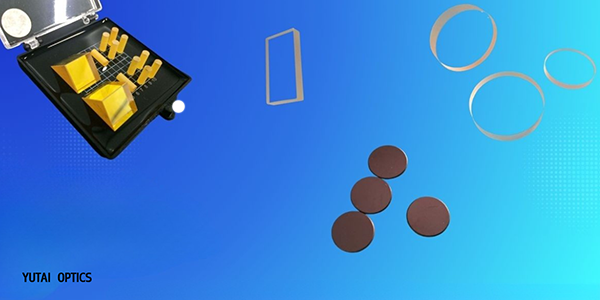
Selecting materials based on the experimental wavelength band: For short-wave infrared experiments, silicon (Si) lenses are the preferred choice due to their high cost-effectiveness and lightweight nature. They are suitable for the 1.2–7 μm wavelength band and are ideal for routine spectral detection and infrared sensing experiments; For mid-to-long-wave infrared experiments, germanium (Ge) lenses are recommended; with a transmittance of nearly 95% in the 8–14 μm wavelength range, they are easily machined into aspherical shapes and are suitable for high-precision focusing and thermal imaging experiments; for high-power laser infrared experiments, zinc selenide (ZnSe) lenses are the preferred choice due to their low absorption and resistance to thermal shock; they are suitable for the 10.6 μm laser wavelength range, preventing lens damage caused by high temperatures. Yutai Optics offers a comprehensive range of infrared optical components, including monocrystalline silicon, zinc selenide (ZnSe), zinc sulphide (ZnS) and calcium fluoride (CaF₂), precisely tailored to meet the broad spectral application requirements of the near-infrared, mid-infrared (3–5 μm) and long-wave infrared (8–14 μm) bands.
Select specifications based on experimental accuracy
For high-precision experiments (such as spectral analysis and precision detection), lenses with high light transmittance and low aberration should be selected, with preference given to products that have undergone precision polishing and anti-reflective coating to minimise light reflection loss and signal distortion; for routine qualitative experiments, standard-grade lenses may be used to balance cost-effectiveness with basic optical performance.
Choose protective equipment based on the experimental environment
For experiments in humid environments, lenses treated with a moisture-resistant coating (such as halide crystal lenses) should be selected to prevent damage caused by moisture absorption; in high-temperature or corrosive environments, sapphire (Al₂O₃) lenses should be prioritised due to their high hardness, heat resistance and corrosion resistance, thereby ensuring experimental stability; in environments subject to strong vibrations, silicon or germanium lenses with high mechanical strength should be selected to prevent lens fracture.
 Summary:
Avoid blindly pursuing high-end materials; instead, select components based on experimental requirements. For instance, there is no need to use expensive sapphire lenses for standard civilian infrared experiments;
Ensure that lens dimensions are compatible with the optical path, verifying that the lens aperture and focal length match the experimental setup to prevent optical path deviation;
Inspect the surface quality of the lenses prior to experimentation to prevent scratches or smudges from affecting light transmittance;
Following prolonged use, carry out regular cleaning and maintenance to extend the service life of the lenses and ensure the consistency of experimental data.
Yutai Optics’ infrared optical components are widely applicable across multiple sectors, including military security, industrial inspection, healthcare, and scientific research: in the military sector, they are used for infrared guidance, night vision equipment and border surveillance; in the industrial sector, they are used for electrical fault detection, laser processing and semiconductor inspection; in the healthcare sector, they are used for non-contact temperature measurement and infrared diagnosis; and in the scientific research sector, they are used for astronomical observation, spectral analysis and infrared detection. Upholding the collaborative philosophy of “technology-centric, customer-oriented and quality-focused”, we remain deeply committed to the field of infrared optics, continuously driving technological innovation and product upgrades. We are dedicated to providing global customers with superior, more efficient and cost-effective infrared optical component solutions, working hand in hand with our clients to explore the vast potential of infrared technology.
The accuracy and stability of infrared experiments hinge primarily on the appropriate selection of lenses. As key components in light transmission and signal focusing, the material, spectral compatibility and optical performance of infrared lenses directly impact the accuracy of experimental data. Lenses must therefore be selected scientifically, taking into account the experimental wavelength range, detection requirements and environmental conditions. The following are the key considerations for selecting infrared lenses:
Define the key parameters of the experiment
Firstly, the experimental wavelength range, specifying whether it is short-wave infrared (0.75–3 μm), mid-wave infrared (3–5 μm) or long-wave infrared (8–14 μm); secondly, the experimental accuracy requirements, such as imaging resolution, transmission efficiency and stray light suppression requirements; and thirdly, the experimental environment, such as temperature, humidity and whether there is contact with corrosive media, which determines the protection and stability requirements for the lenses.
Matching materials and performance
Selecting materials based on the experimental wavelength band: For short-wave infrared experiments, silicon (Si) lenses are the preferred choice due to their high cost-effectiveness and lightweight nature. They are suitable for the 1.2–7 μm wavelength band and are ideal for routine spectral detection and infrared sensing experiments; For mid-to-long-wave infrared experiments, germanium (Ge) lenses are recommended; with a transmittance of nearly 95% in the 8–14 μm wavelength range, they are easily machined into aspherical shapes and are suitable for high-precision focusing and thermal imaging experiments; for high-power laser infrared experiments, zinc selenide (ZnSe) lenses are the preferred choice due to their low absorption and resistance to thermal shock; they are suitable for the 10.6 μm laser wavelength range, preventing lens damage caused by high temperatures. Yutai Optics offers a comprehensive range of infrared optical components, including monocrystalline silicon, zinc selenide (ZnSe), zinc sulphide (ZnS) and calcium fluoride (CaF₂), precisely tailored to meet the broad spectral application requirements of the near-infrared, mid-infrared (3–5 μm) and long-wave infrared (8–14 μm) bands.
Select specifications based on experimental accuracy
For high-precision experiments (such as spectral analysis and precision detection), lenses with high light transmittance and low aberration should be selected, with preference given to products that have undergone precision polishing and anti-reflective coating to minimise light reflection loss and signal distortion; for routine qualitative experiments, standard-grade lenses may be used to balance cost-effectiveness with basic optical performance.
Choose protective equipment based on the experimental environment
For experiments in humid environments, lenses treated with a moisture-resistant coating (such as halide crystal lenses) should be selected to prevent damage caused by moisture absorption; in high-temperature or corrosive environments, sapphire (Al₂O₃) lenses should be prioritised due to their high hardness, heat resistance and corrosion resistance, thereby ensuring experimental stability; in environments subject to strong vibrations, silicon or germanium lenses with high mechanical strength should be selected to prevent lens fracture.
Avoid blindly pursuing high-end materials; instead, select components based on experimental requirements. For instance, there is no need to use expensive sapphire lenses for standard civilian infrared experiments;
Ensure that lens dimensions are compatible with the optical path, verifying that the lens aperture and focal length match the experimental setup to prevent optical path deviation;
Inspect the surface quality of the lenses prior to experimentation to prevent scratches or smudges from affecting light transmittance;
Following prolonged use, carry out regular cleaning and maintenance to extend the service life of the lenses and ensure the consistency of experimental data.
Yutai Optics’ infrared optical components are widely applicable across multiple sectors, including military security, industrial inspection, healthcare, and scientific research: in the military sector, they are used for infrared guidance, night vision equipment and border surveillance; in the industrial sector, they are used for electrical fault detection, laser processing and semiconductor inspection; in the healthcare sector, they are used for non-contact temperature measurement and infrared diagnosis; and in the scientific research sector, they are used for astronomical observation, spectral analysis and infrared detection. Upholding the collaborative philosophy of “technology-centric, customer-oriented and quality-focused”, we remain deeply committed to the field of infrared optics, continuously driving technological innovation and product upgrades. We are dedicated to providing global customers with superior, more efficient and cost-effective infrared optical component solutions, working hand in hand with our clients to explore the vast potential of infrared technology.
Share this:


PREV : With its exceptional performance, fused silica leads the way in high-end optical applications NEXT : Applications of Hydrophobic Coating
TALK TO US 86-15584132290
Call us now!
86-15584132290Call us now!

ONLINE CHAT
 2433808388
2433808388